
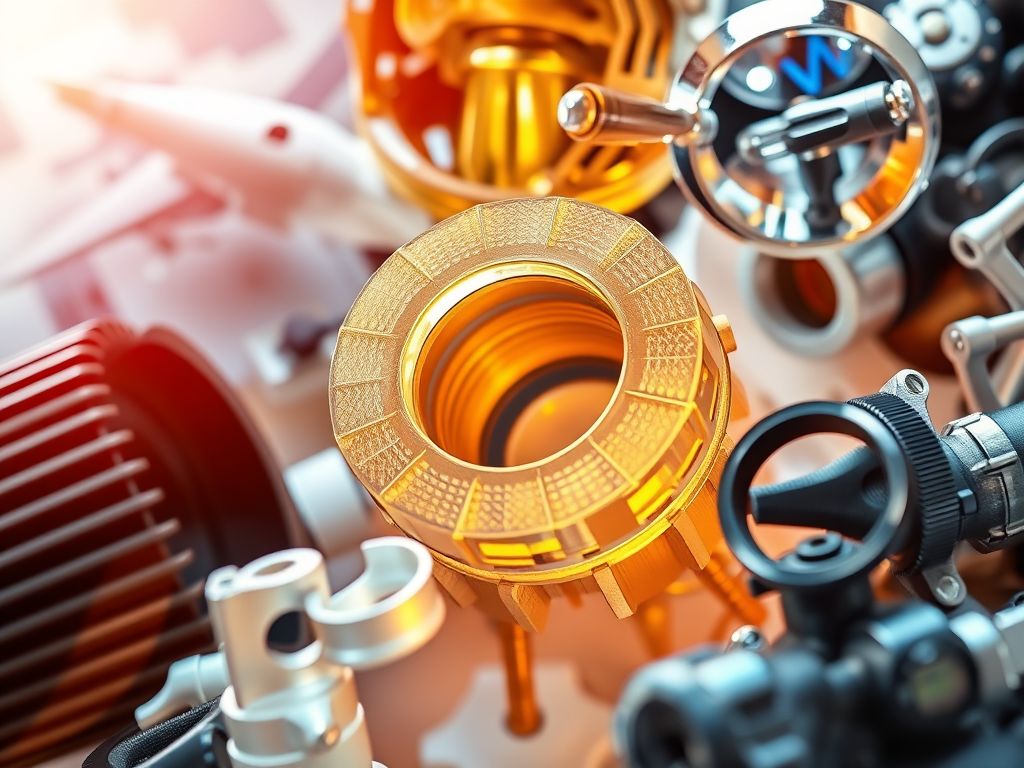
PEKK is a high-performance engineering plastic that exhibits excellent mechanical strength, high-temperature resistance, chemical corrosion resistance, and good processability, widely used in aerospace, electronics, electrical equipment, automotive, and medical fields. With advancements in technology, the application range of PEKK continues to expand, gaining favor from an increasing number of industries, especially as the demand for materials in extreme environments gradually rises. This plastic can withstand temperatures of up to 250 degrees Celsius while maintaining its physical properties in various harsh chemical media. Additionally, its low friction coefficient enables broader applications in mechanical components, making it an ideal material for manufacturing wear-resistant and load-bearing parts. Furthermore, PEKK has remarkable dimensional stability, which enhances its reliability in high-precision applications in aerospace and medical fields.
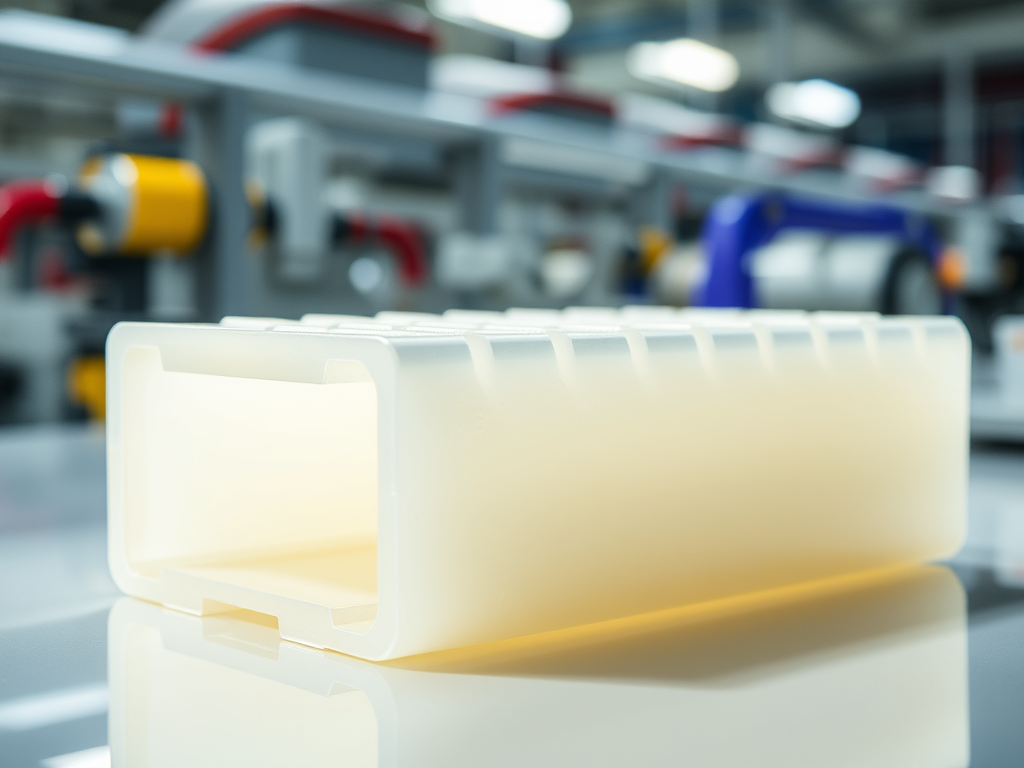
Pure PEEK Resin: The Uncompromised Performance Standard
Pure PEEK resin represents the pinnacle of high-performance thermoplastics, offering an unmatched combination of thermal stability, chemical resistance, and mechanical properties. With a melting point of 343°C and continuous service temperature up to 260°C, it maintains structural integrity in extreme environments where most materials fail. Its exceptional resistance to hydrolysis allows prolonged operation in 200°C steam environments, making it indispensable for medical sterilization processes and high-temperature chemical applications. The material’s inherent self-lubricating properties (friction coefficient as low as 0.15) eliminate the need for external lubricants in precision bearings and seals. In semiconductor manufacturing, pure PEEK’s ultra-high purity and electrical insulation properties prevent contamination and ensure signal integrity in wafer handling equipment. Its radiolucency makes it ideal for medical implants where X-ray visibility is critical, while its biocompatibility meets stringent ISO 10993 standards for long-term implantation. Pure PEEK’s versatility extends to aerospace components, where it replaces metal in non-structural parts requiring weight savings without sacrificing performance.
Friction and Wear Polymer Grades: Engineered for Extreme Durability
Specialized friction and wear polymer grades of PEEK are engineered for applications demanding exceptional surface durability and low friction under high load conditions. These grades feature optimized molecular structures that maximize the inherent self-lubricating properties of PEEK, resulting in wear rates that are 10-100 times lower than conventional polymers. The Taber wear test demonstrates exceptional performance, with wear loss values as low as 0.01 mg per cycle under heavy loads. These materials excel in high-stress applications such as piston rings, valve components, and gear systems where metal-to-metal contact would lead to rapid failure. In the oil and gas industry, friction and wear grades of PEEK are used in downhole tool components that withstand abrasive drilling fluids and high-pressure environments. The semiconductor industry relies on these grades for wafer carriers and handling equipment that must operate flawlessly in cleanroom environments without generating particulate contamination. Their ability to maintain consistent friction coefficients over time makes them ideal for precision motion control systems in medical robotics and high-speed manufacturing equipment.
Carbon Fiber Reinforced Grades: The Ultimate in Strength-to-Weight Ratio
Carbon fiber reinforced PEEK grades represent the cutting edge of composite materials, offering unparalleled strength-to-weight ratios that redefine engineering possibilities. The addition of carbon fibers (typically 30-40% by weight) increases tensile strength to 1,000 MPa and stiffness to 10-15 GPa, while maintaining PEEK’s thermal stability and chemical resistance. These composites can withstand temperatures up to 260°C continuously and resist thermal degradation up to 300°C, making them ideal for aerospace applications where weight reduction is critical. The carbon fiber reinforcement provides exceptional fatigue resistance, with a fatigue strength at 10⁶ cycles exceeding 50% of the ultimate tensile strength. In the automotive sector, carbon fiber reinforced PEEK is used for high-performance brake caliper components, reducing unsprung mass by up to 40% compared to metal alternatives. The aerospace industry utilizes these grades for structural components in next-generation aircraft, including wing ribs, engine mounts, and interior panels. The material’s electrical conductivity (5-10⁴ S/m) makes it suitable for EMI shielding applications, while its thermal conductivity (25-35 W/m·K) ensures efficient heat dissipation in high-power electronic systems.
Glass Fiber Reinforced Grades: Enhanced Mechanical Performance with Thermal Stability
Glass fiber reinforced PEEK grades offer a balanced combination of enhanced mechanical properties and thermal stability, making them suitable for a wide range of industrial applications. Typically reinforced with 30% glass fibers, these grades achieve a heat deflection temperature of 315°C (ASTM D648), significantly higher than unreinforced PEEK. The glass fiber reinforcement increases tensile strength to 120-150 MPa and modulus to 4-6 GPa, while maintaining excellent impact resistance. These grades are particularly valued for their dimensional stability under thermal cycling, with a coefficient of thermal expansion of 25-35 ppm/°C, making them ideal for precision components that must maintain tight tolerances across wide temperature ranges. In the semiconductor industry, glass fiber reinforced PEEK is used for wafer carriers, chuck components, and cleanroom handling equipment where thermal stability and low outgassing are critical. The oil and gas sector relies on these grades for downhole tool components that withstand high pressures and corrosive environments. In the automotive industry, glass fiber reinforced PEEK serves as the material of choice for under-the-hood components, including intake manifolds, sensor housings, and turbocharger components, where the combination of thermal stability, chemical resistance, and mechanical strength is essential. The material’s excellent electrical insulation properties (volume resistivity > 10¹⁵ Ω·cm) make it suitable for high-voltage applications in electric vehicles and power distribution systems.
 libertia® performance- focus on High Performance Polymers